[Case 03]
AI-Powered Returns
Make the unhappy path feel fair

UX Lead
End-to-end
2024
Visons to launch
378K
Fewer contacts/year
65.5%
Lifecycle coverage

Making returns feel fair, fast, and clear
Redesigned returns to cut 378K support contacts/year, lift lifecycle coverage 61% → 65.5%, clarify ~85% vague reasons, and identify 28.8% of fashion returns as normal trialing.
What I Build
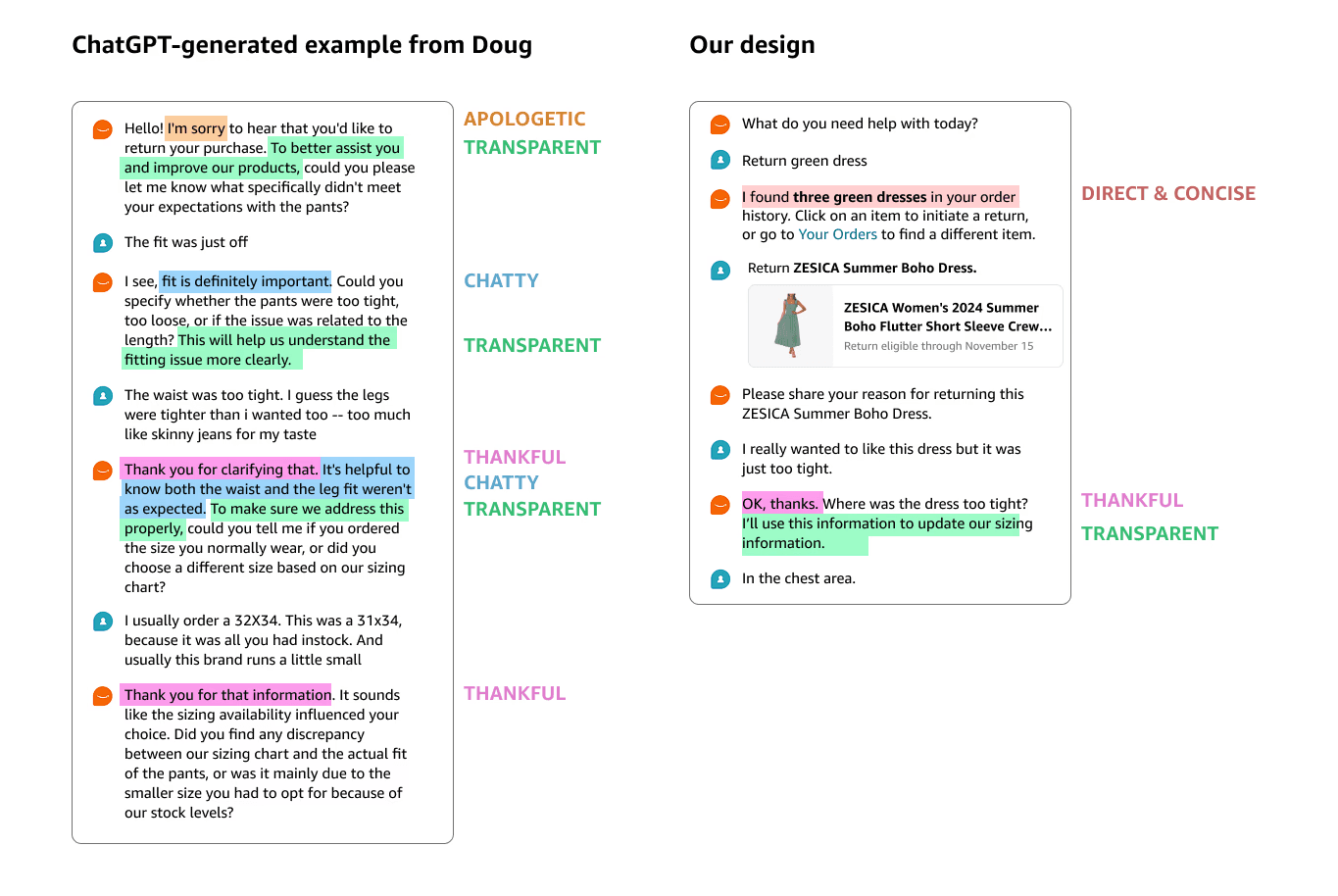
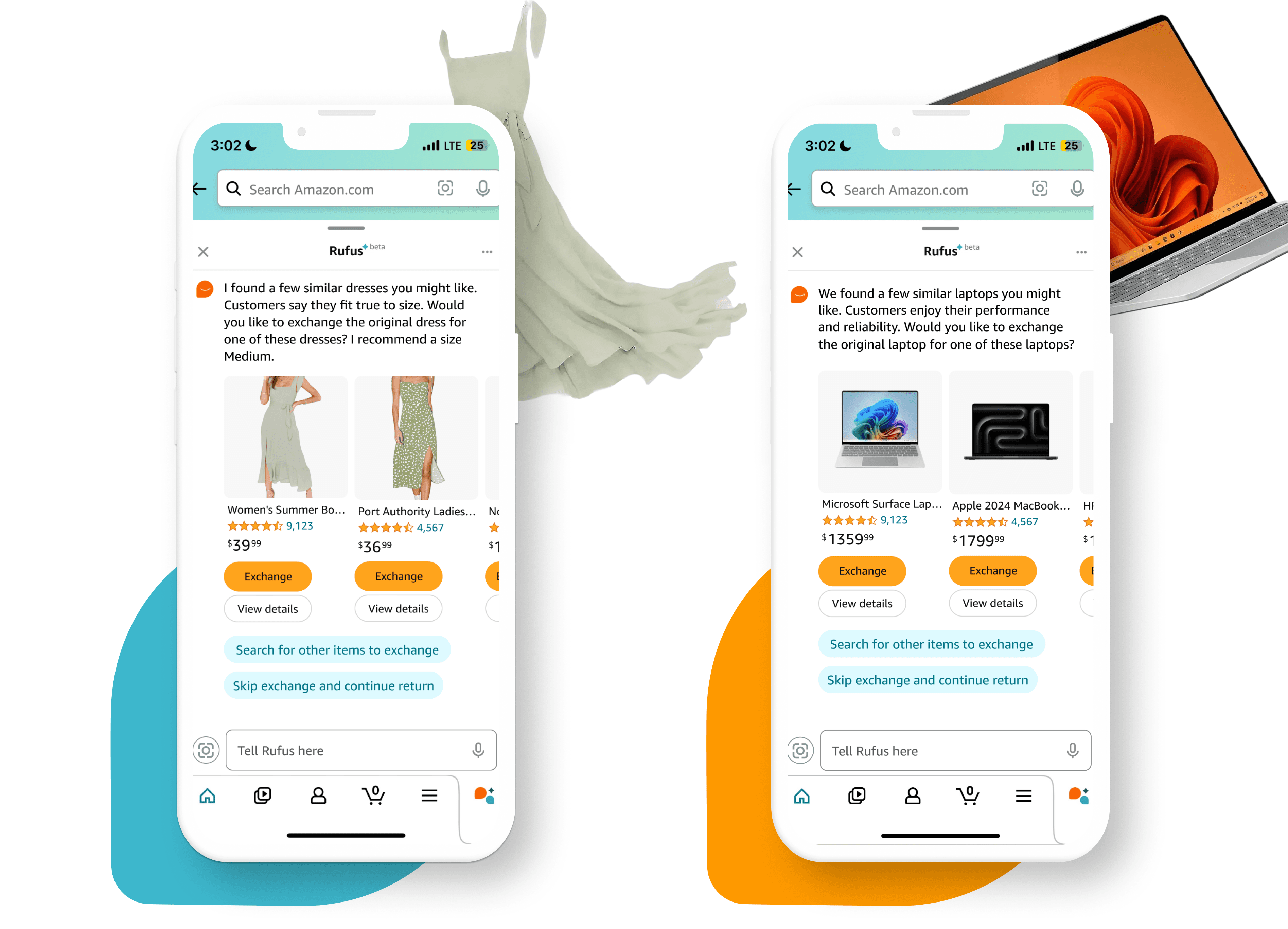
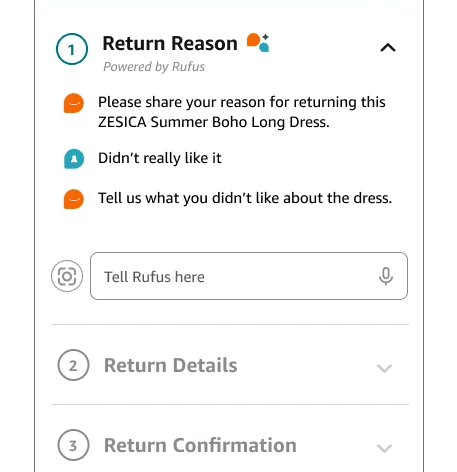
AI Reason Clarification
Vague text → 1–2 questions → structured intent
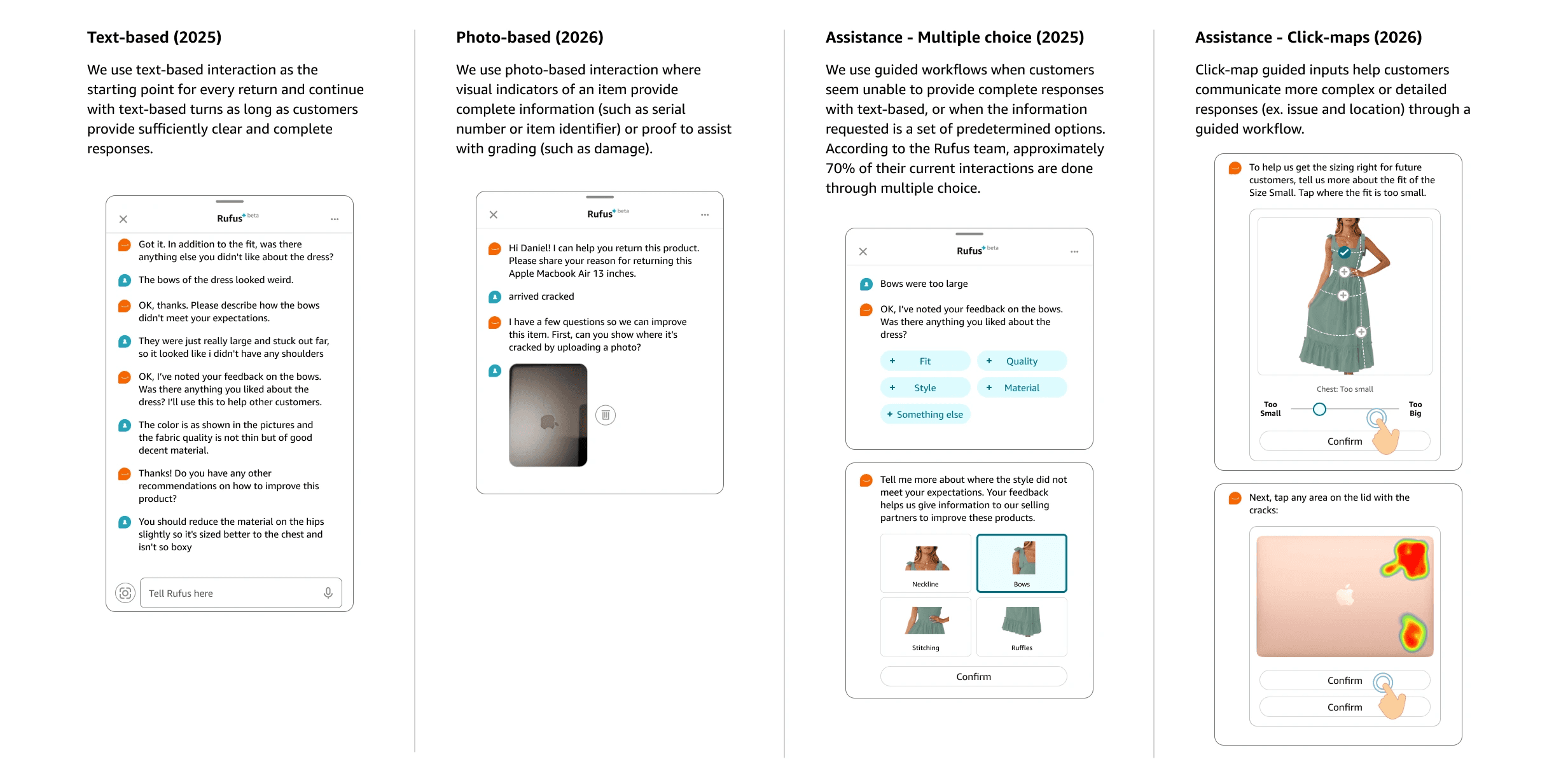
Proof capture + multiple choice
My Scope
Returns framework + policy strategy
End-to-end journey design · Policy-aware UX
AI clarification + guided flows
Generative AI UX · Interaction design
Metrics + experimentation plan
Experimentation · Data-informed decisions
Context
The Problem
Refund status is unclear
Customers can’t confidently answer “where is my refund?”
“Did my refund go through?”
Low-signal return reasons
Vague reasons don’t help products or policies improve
“I don’t like it… what do I choose?”
Normal behavior treated as risk
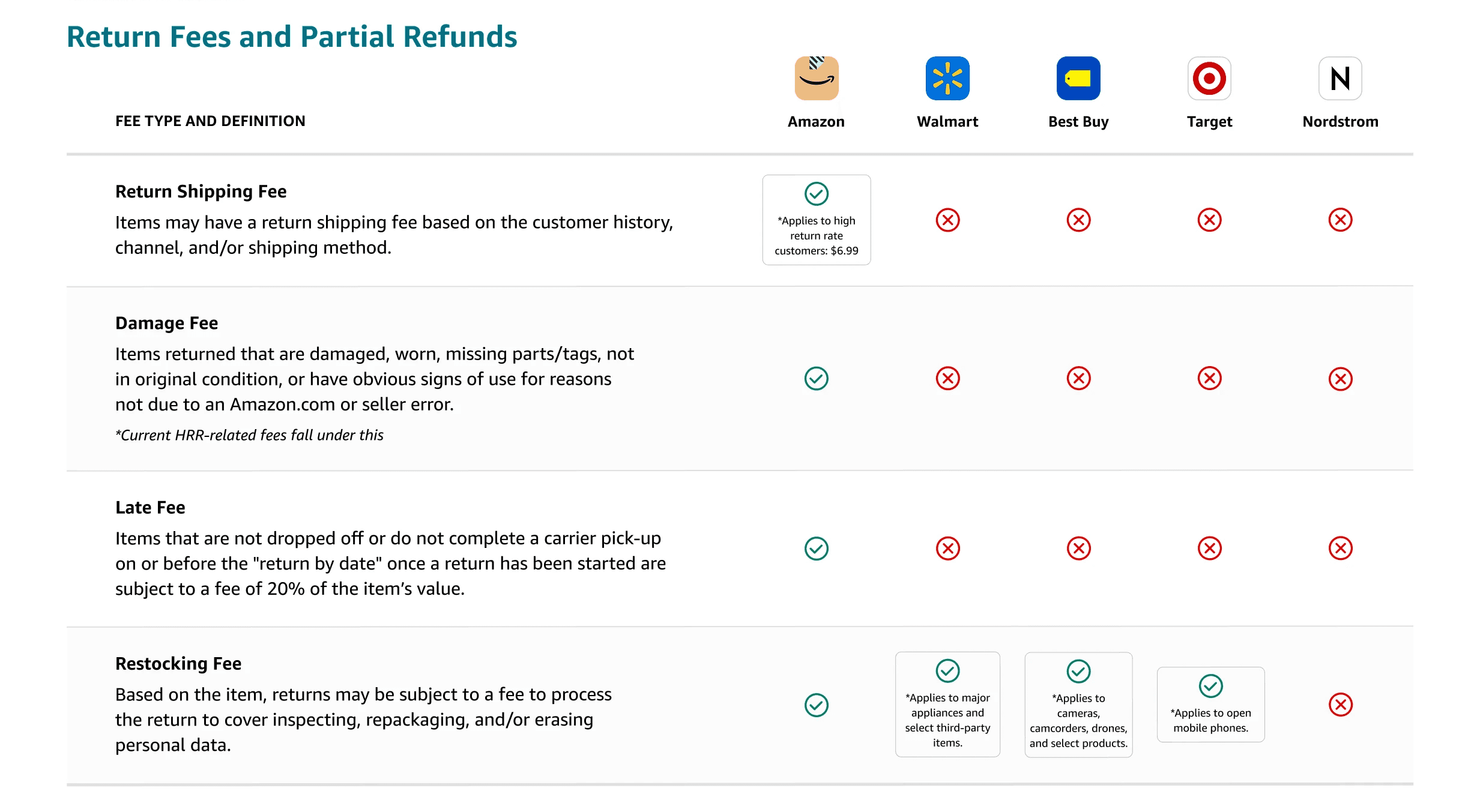
Trialing and high-return cohorts handled the same
“Why am I being penalized?”
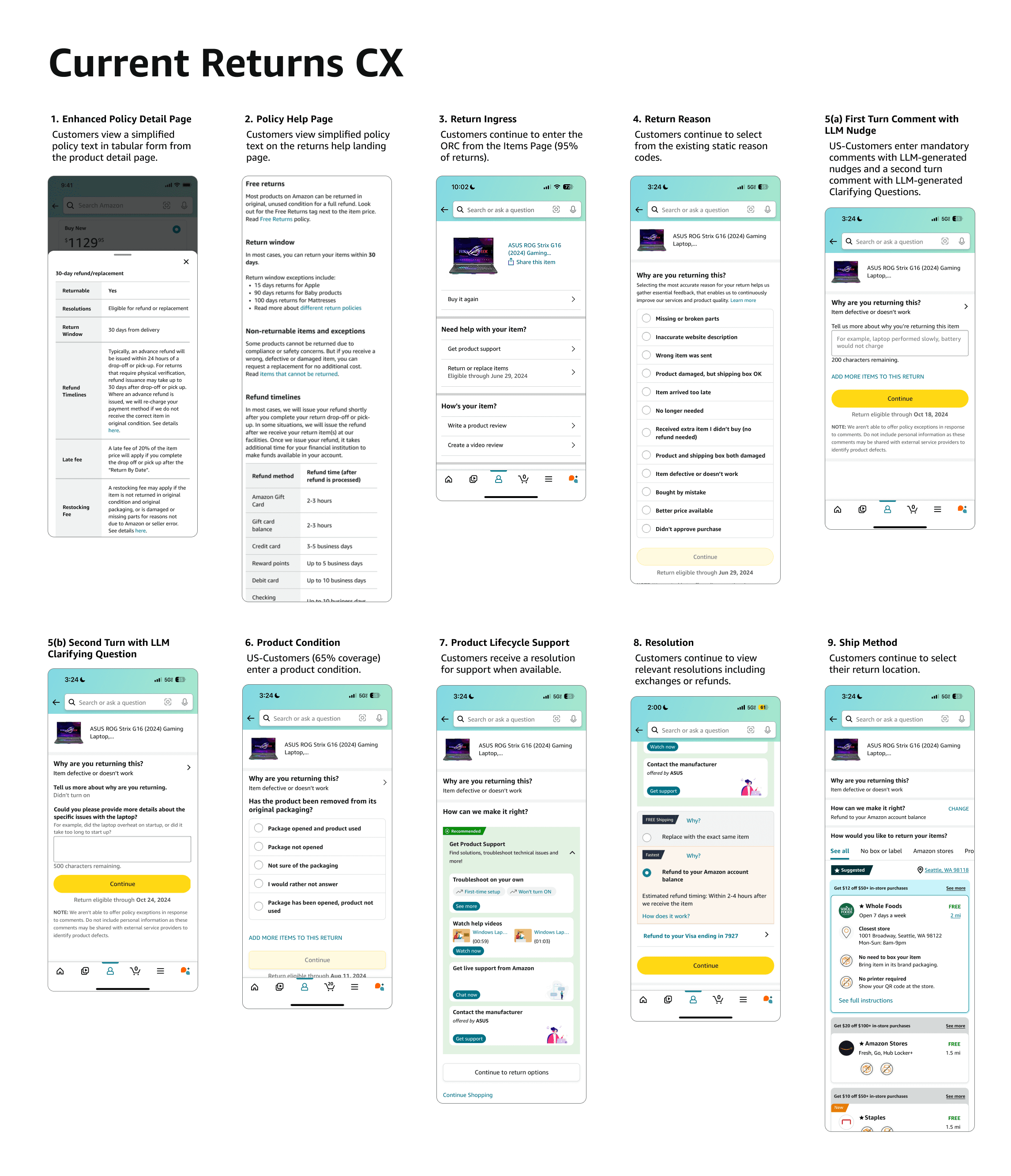
Too many one-off return flows
Inconsistent rules and screens across categories
“Why does returns work differently every time?”
The Bet
Make returns feel fair
Guide customers to the right path with clarity, transparency, and minimal friction.
Outcome